
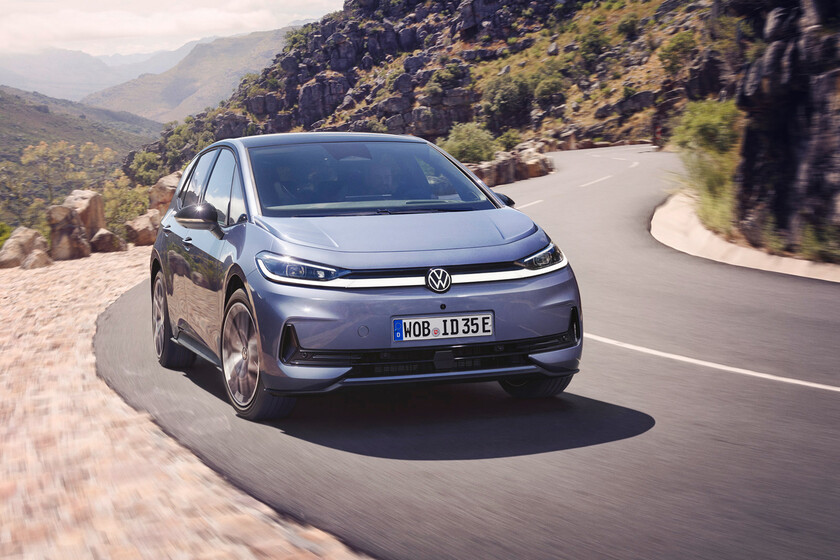
The new Volkswagen ID.3 Neo is already on sale, and the name change is not cosmetic. The German brand has carried out a deeper update that the electric compact has received since its debut in 2019.
The declared objective is to place the real needs of the user at the center of the product, a stylish way to admit that the original ID.3 had accumulated too many criticisms for its ergonomics and its perception of low quality.
An update to correct the mistakes of the first ID.3
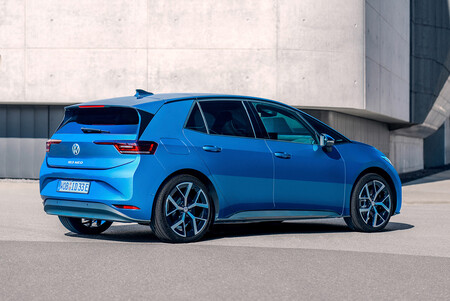
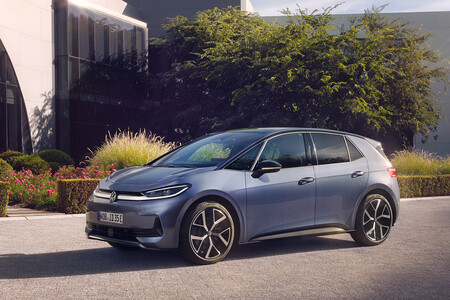
The exterior redesign is deliberately subtle. The ID.3 Neo maintains the same rear-wheel-drive propulsion architecture of the MEB platform, though it now debuts an evolution that Volkswagen calls MEB+. On the outside, the spoiler and the rear hatch shed the contrasting black to wear the body color, a device that aims to give a sense of greater width and visual stability.
The real qualitative leap occurs inside the cabin. Volkswagen has listened for years to complaints about the entirely touch-based controls and brings back physical buttons, including dedicated controls for the rear windows and a rotary dial for the volume, something unimaginable in the original ID.3.

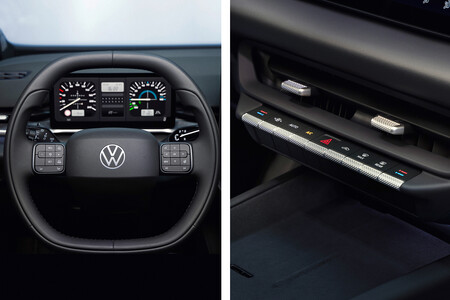
The infotainment system is completely renewed and includes its own app store for music, video, and games, replacing the criticized Discover. Perceived quality rises a notch thanks to softer-touch materials and a horizontal layout of the dashboard.
In mechanical terms, the change is deeper than what a simple restyling would suggest. It remains a rear-wheel-drive with the motor located over the front axle. It is available in three power levels: 170, 190 and 231 HP, associated respectively with usable battery capacities of 50, 58 and 79 kWh.
With the larger battery, the WLTP-certified range reaches 627 kilometers, a figure that positions the hatch among the most efficient in its class. The entry-level version, with the 50 kWh battery and LFP chemistry, is rated at 415 km, while the mid-range 58 kWh reaches 485 km.
DC fast charging improves for the large battery up to 183 kW, while the two smaller batteries, both LFP, stay at 105 kW. As standard, the ID.3 can now be equipped with one-pedal driving, and among the technological novelties stands the Connected Travel Assist, capable of recognizing traffic lights and stopping the car autonomously while the driver remains in control.
The ID.3 Neo will be offered in two trims, Life and Style. The entry price in Spain is set at 25,980 euros. The rest of the prices in the Volkswagen ID.3 Neo lineup are as follows:
|
Power |
battery |
WLTP range |
price |
|
|---|---|---|---|---|
|
ID.3 Neo Life |
170 HP |
50 kWh |
415 km |
25,980 euros |
|
ID.3 Neo Life |
190 HP |
58 kWh |
492 km |
28,720 euros |
|
ID.3 Neo Life |
231 HP |
79 kWh |
628 km |
33,720 euros |
|
ID.3 Neo Style |
190 HP |
58 kWh |
485 km |
32,305 euros |
|
ID.3 Neo Style |
231 HP |
79 kWh |
627 km |
37,300 euros |
The ID.3 has been one of the best-selling electric vehicles in Europe, with around 78,000 units delivered in 2025, a strong argument to justify the renewal investment against direct rivals such as the Renault Megane E-Tech, the Peugeot e-308, the Kia EV4, or the MG4 Urban. For now, the Volkswagen ID.3 Neo coexists in the Volkswagen lineup with the previous ID.3.
Find your ideal electric car
If you have considered buying an electric car, this will interest you. We have created the Personalized Electric Car Recommender, in which besides viewing models that fit your needs you will also get answers to the questions you might worry about most, such as price, range, or nearby charging points.

¿Buscas tu próximo coche eléctrico y estás sobrepasado con tanta opción? Es normal.
Más de 45,000 lectores ya lo han probado. ¿Y tú?
Advice offered by the brand