
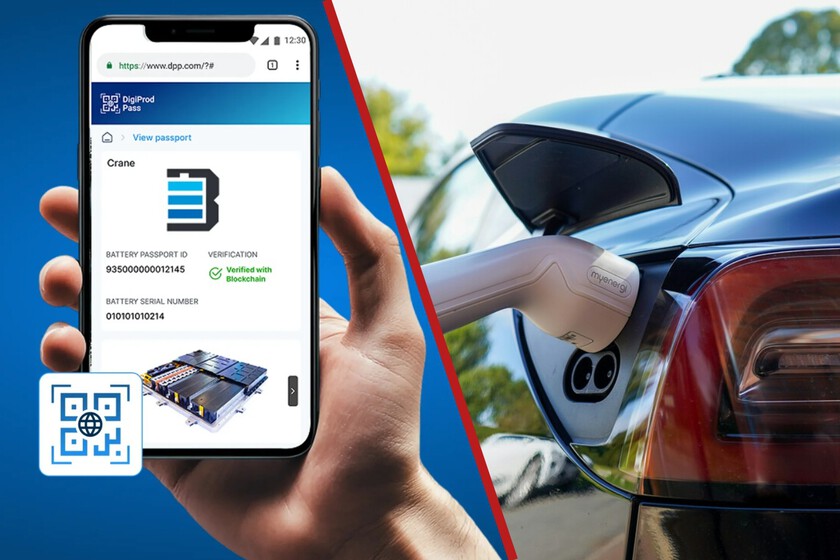
The battery is the crucial element of an electric car when we talk about lifespan: if it is used, the buyer wonders whether it is nearing the end of its cycles; if it is new, whether it will depreciate too quickly if they want to sell it later. This now depends on the seller’s word or on what the manufacturer promises. Europe wants to change this with the Battery Pass.
This sort of digital ID for the battery, which will become mandatory in a few months, arrives to make life easier for buyers or owners of cars and plug-in vehicles. Simply by scanning a QR code, one will have access to all the essential information about the battery: from the origin of materials to its performance or degradation.
An “ID” for Electric Car Batteries: How the European Battery Pass Works
This Battery Pass is not merely a EU recommendation: any vehicle that carries a battery with a capacity of 2 kWh or more will have to possess this digital document. This includes plug-in cars (electric and PHEV), but also vans, motorcycles, bicycles or electric scooters. It is covered by the new European Batteries Regulation, approved in 2023, and will be mandatory from February 18, 2027. From that date, vehicles that do not have this battery passport cannot be marketed.
This document will be linked to the vehicle’s VIN and will be accessible via a QR code located on both the battery and the vehicle (hood, charging port cover or in the driver’s door). Thus, one will be able to know firsthand all the battery’s relevant information when buying a car. But also during its use and maintenance, whether to charge it correctly to extend its life or for repair shops.

What data will this QR show? Annex XIII of this EU regulation lists all the information that the Battery Pass must collect, with detailed information about the battery. It is structured into six key areas, for both vehicle owners and for mechanics or sellers:
- General information about the battery and manufacturer. Who produced it, the battery type (model and category), serial number, date and place of manufacture, device weight and chemical composition.
- Battery composition. Detailed list of materials used (critical raw materials such as lithium, cobalt or nickel), the percentage of recycled materials or whether it includes hazardous substances. The Regulation stipulates a maximum amount of harmful substances in batteries approved in Europe.
- Performance and durability. Nominal battery capacity (ampere hours) and voltage as well as minimum, nominal and maximum voltages with temperature ranges. Expected lifespan (in cycles and years) and specification of the test performed, plus the limit of battery depletion capacity. Also its energy efficiency (initial and at 50% of its life cycle), charging rate, the commercial warranty period with respect to its life and ways to check the device’s health status (SoH).
- Sustainability and environmental impact. Information on the battery’s carbon footprint in its manufacture (whether clean or renewable energy was used or not) and how much carbon was generated in the production process (in g/CO₂). Also information about its repairability and possibilities for reuse for a potential second life.
- Safety. Reflect everything related to safety and transport standards, instructions for proper and safe storage and handling, incident history, failures or possible defects detected during use.
- End-of-life management. Instructions for safely dismantling the device (step-by-step procedure and required tools), safety measures for its recycling (removal and handling) or information to identify components and materials to facilitate recycling.
Will plug-in cars be more expensive? Implementing the Battery Pass will require additional costs for data management and traceability. It will depend on the technology used, but Circulator, a firm specialized in supply chain visibility and in creating origin certificates for batteries, estimates an extra cost of between 8 and 15 euros per vehicle.
Manufacturers will pass this amount on to the final price of the car, but if this estimate is correct, it won’t be excessively high in exchange for the benefits in terms of transparency and access to essential information for the use and maintenance of a battery.
Circular economy. Thanks to this battery passport, and beyond all that is necessary to know its status, maintenance or use, we will also know what will happen to the device when the car goes to scrap. From how its materials will be recycled, or where, to whether it can be reused in some way, for example in home, factory or charging-point energy storage systems.
Find Your Ideal Electric Car
If you have considered buying an electric car, this will interest you. We have created the Personalized Electric Car Recommender in which, in addition to seeing models that suit your needs, you will also get answers to questions that may worry you the most, such as price, range or nearby charging points.

Looking for your next electric car and overwhelmed by so many options? It’s normal.
More than 45,000 readers have already tried it. And you?
Advice offered by the brand