
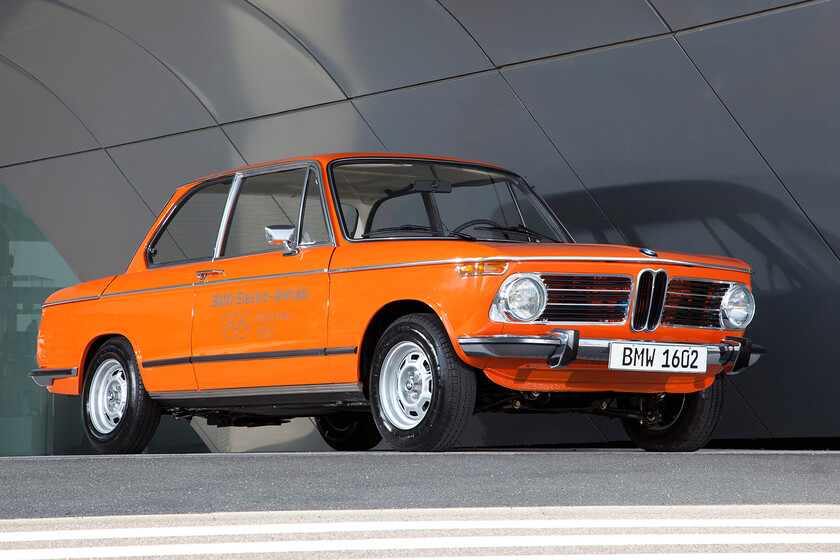
As of today, BMW already offers a wide range of electric cars for sale, but to trace the seed of the Bavarian firm’s zero-emission line we have to go back about half a century.
And it is that this year, with the unveiling of the new BMW 3 Series and its corresponding 100% electric version, more than 50 years have elapsed since the first electric car from BMW. An embryonic model that can indeed be regarded as the grandfather of the Neue Klasse.
Although before the arrival of the new electric Series 3, or rather before the advent of the first i3 as BMW’s electric offensive, there were also other electric cars born within the German marque.
An Olympic Electric Car with Up to 60 km of Range

The year was 1972 when BMW unveiled its first electric car to the world: the BMW 1602 Elektro. Specifically on September 10, in a very special setting: during the Olympic Games, held that year in Munich.
This embryonic zero-emission vehicle was based on the BMW 1602, the predecessor of today’s Series 3, but with the gasoline drivetrain replaced by an electric one. In other words, it was identical to the 1602, but with a different heartbeat.
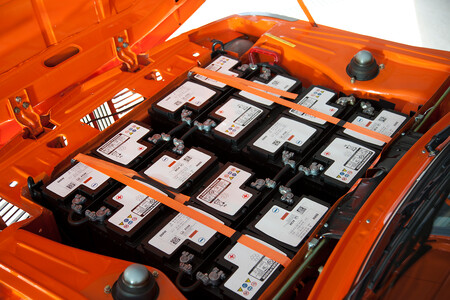
Thus, the M10 block was replaced by an electric motor of 32 kW (43 HP), which also transmitted power to the rear wheels, drawing its energy from twelve standard lead-acid batteries developed by Varta and installed under the hood. Yes, ordinary, run-of-the-mill batteries.
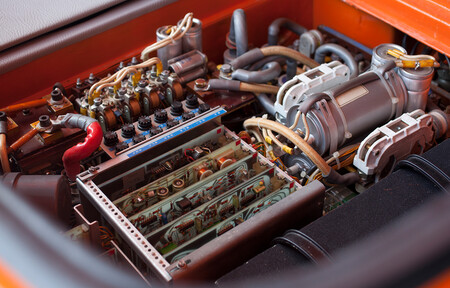
The weight of these devices was 350 kg, and the total capacity was set at 12.6 kWh. With these batteries, the primitive BMW electric car promised a range of about 30 to 60 km. And it needed 8 seconds to do the 0-100 km/h sprint. Not bad at all.
Two units of the BMW 1602 Elektro emerged, painted in a striking orange and were used as support vehicles for the marathon near its conclusion.
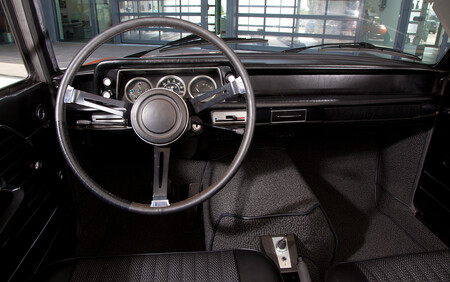
BMW proudly notes that this seed of an electric car boasted technologies that we recognize in today’s zero-emission vehicles, including a regenerativen braking system: the electric motor also acted as a generator, returning energy to the batteries during deceleration.
Other BMW Electrics Before the i3: from the LS Electric to the ActiveE
While the BMW 1602 Elektro was the first true electric car from the German marque, other zero-emission concepts arrived in the following three decades.
That said, none of these cars went on sale: to see a BMW electric on the market, one had to wait until 2013, when the BMW i3 was launched.
BMW LS Electric (1975)
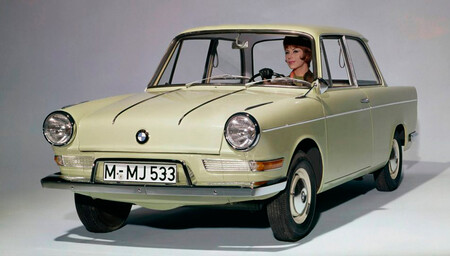
Only three years later, BMW repeated the experiment, but this time based on a BMW LS (BMW 700), another small model from the brand which remained in production until 1965.
In this case, it was equipped with an electric propulsion system of 17 kW (23 HP), accompanied by ten Varta batteries totaling 10.8 kWh. Its top speed reached 65 km/h and it could accelerate from 0 to 50 km/h in 11.4 seconds. Perhaps it was Furious, but not very Fast. Pardon the pun.
Its range was also modest: 30 km. Yet compared to the 1602 Elektro, it introduced an innovation: a recharge plug. Despite the batteries not being large, it still took a staggering 14 hours to recharge.
BMW 325iX (1987)
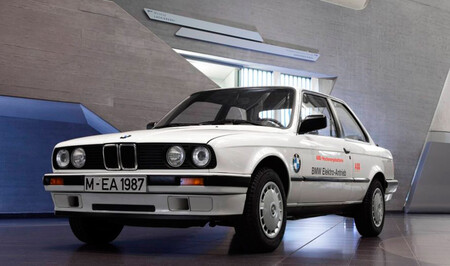
More than a decade passed before BMW returned with another electric model. It was the BMW 325iX Electric, which served as a testbed for a new battery system based on sodium-sulfur chemistry, with energy capacity three times greater than lead-acid and lighter in weight.
Built on the second generation of the 3 Series (the E30), BMW manufactured a total of eight units with an electric motor of 22 HP (30 HP) and they were used as delivery vehicles for Germany’s postal service.
It was a great proving ground to test this new battery that promised up to 150 km of range.
BMW E1 (1991)
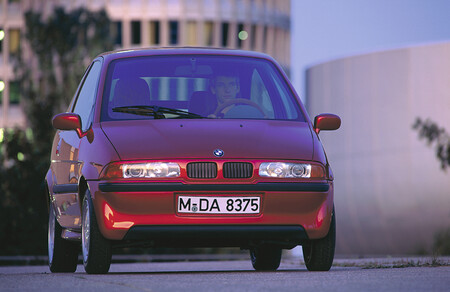
In September 1991, BMW presented at the Frankfurt Auto Show the BMW E1, the first BMW electric car developed from scratch and not based on any existing model.
It was a compact urban car measuring 3.4 m long, 1.6 m wide and 1.50 m tall, accommodating four occupants. It began as the project Z11 and BMW took 10 months to develop it.
The BMW E1 mounted the same propulsion unit as the 1602 Elektro, at 32 kW (43 HP), but powered by the new Zebra batteries developed by the brand and composed of a combination of sodium, nickel and chlorine.
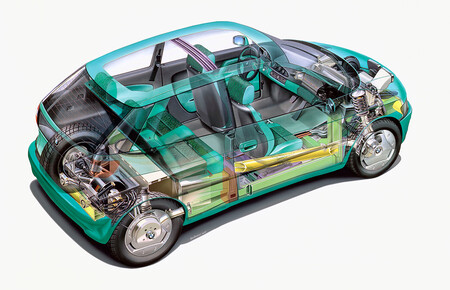
They weighed 200 kg and the E1’s range extended up to 160 km. Additionally, it featured a new regenerative braking system, which used decelerations and braking to return energy to the batteries.
The BMW E1 was exceptionally light, tipping the scales at 907 kg thanks to an aluminum chassis and a body built from recyclable polymers.
Its charging system was quite advanced: a conventional plug took between six and eight hours to charge (not far from today’s standards). And with a high-power charger it could do so in about an hour (up to 80%).
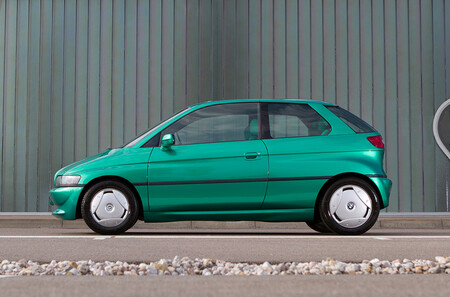
BMW produced five E1 prototypes, and even an updated version, the BMW E2, which was presented at the Los Angeles Auto Show in 1992. This variant was slightly longer (+3.6 cm) and BMW’s aim was to market it in the United States.
However, neither the E1 nor the E2 reached serial production, as electric cars were still ahead of their time and there was no supporting infrastructure yet.
BMW 325i Electric (1991 – 1997)
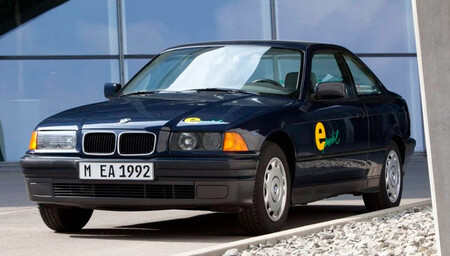
After testing the 325iX Electric, the German manufacturer returned to the Series 3 platform, this time based on the E36 generation, to continue experimenting with electric cars.
Thus, between 1991 and 1997 it developed up to 25 prototypes of this BMW 325i Electric, built on the original model, known as E-mobil, and on the restyled version. The first eight were used in pilot tests on the island of Rügen (in the Baltic Sea), aiming to verify the feasibility of an electric car.
The remaining concepts moved off the road and were tested internally by the brand at its facilities.
The most powerful of these BMW 325i Electric models mounted a 45 kW (61 HP) motor and a top speed of 135 km/h. Its batteries were sodium and nickel, like those in the E1, and its range between charges was set at around 150 km.
As with the rest of BMW’s embryonic zero-emission vehicles, it never reached mass production. It did, however, pave the way for the i4 and for the recently introduced electric variant of the Series 3, which is currently sold mainly in China.
BMW ActiveE (2011)
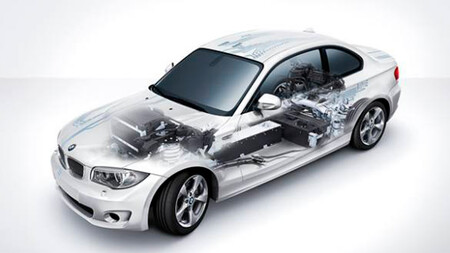
We conclude our tour of BMW’s embryonic electrics into the 21st century with the BMW ActiveE. It was conceived on the BMW 1 Series Coupé, but replaced the internal combustion with a zero-emission drivetrain.
The BMW ActiveE featured a rear-mounted electric block of 126 kW (170 HP) and 250 Nm of peak torque. It was therefore much closer to today’s models. Its top speed reached 145 km/h and it could accelerate from 0 to 100 km/h in 9.0 seconds.
Its battery was more modern as well, transitioning to a lithium-ion pack, and it required four to five hours to recharge at a wallbox. BMW promised around 160 km of range per charge under normal conditions, i.e., without cutting back on climate control or seat heating.
The ActiveE served as another test bed on the doorstep of BMW’s first mass-produced electric car: the i3. It boasted technologies that are common today, such as remote charging via a mobile app or preconditioning the cabin before driving.
In total, BMW built 1,000 units, all part of the EfficientDynamics program’s testing, but none were ever sold to the public.
The Death of the BMW i3 and a Return to ‘Normal’ Cars
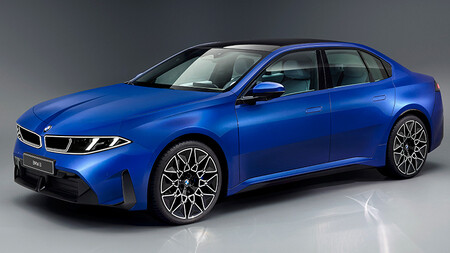
After nine years on the market, the BMW i3 had sold 250,000 units worldwide, turning into a successful car for the brand. More so if we consider it was the company’s first truly 100% electric vehicle.
But in 2022 the Bavarians put an end to the tiny minivan (or whatever it was) and, in the summer of that year, we said goodbye to it. A car as quirky as it was innovative, with solutions such as its carbon fiber chassis or a futuristic design that later fed other iconic models like the i8, although technically the sports car wasn’t a pure electric car.
And BMW realized that even if people wanted an electric car, they did not necessarily want a car that looked weird. That’s when the new i4, iX, i5, and i7 arrived—electric proposals (almost) identical to their gasoline counterparts but with zero emissions.
Now it’s the turn of the Neue Klasse, with the BMW Series 3 as the direct reference and, in a sense, a tribute to the original 1602. The circle closes for BMW’s electric cars.

Looking for your next electric car and feeling overwhelmed by the sheer number of options?
More than 45,000 readers have already tried it. And you?
Advice offered by the brand