
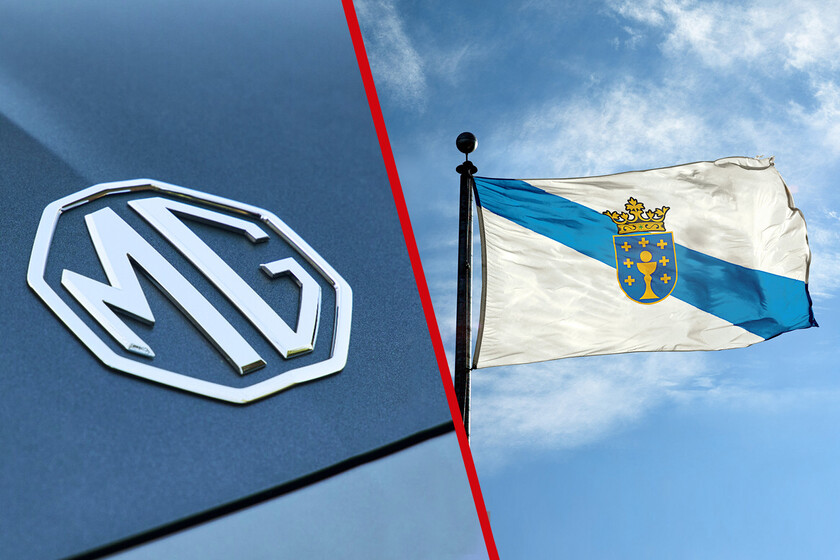
The Chinese industrial push is underway. Nothing can stop it now. SAIC, MG’s parent company, will establish industrial operations in the province of A Coruña. The announcement came this Monday from the Xunta. “The plan is to begin construction of the complex in 2027 and have the factory up and running before the end of 2028,” said President Alfonso Rueda at the press conference. The production target is 120,000 vehicles per year.
Job creation is always welcome news, but this is not a factory per se, but a kit-car assembly zone manufactured in China by a conglomerate that owns one of the sector’s largest vertical integrations, with its own logistics and suppliers.
A factory to dodge tariffs and keep production in China
The factory will be located in As Pontes, near Ferrol. It will create more than 2,000 jobs in Europe, MG explains, and will become a strategic hub for MG’s next growth phase. Production is planned to begin in 2028, with an annual capacity of up to 120,000 vehicles.
SAIC, via MG, is the leading Chinese manufacturer in Europe, with 110,300 registrations in four months and a market share of 2.4%, backed by a network of more than 1,300 partner dealers spread across 34 markets. SAIC thus surpasses BYD (2.2%) and Chery (2%), with sales essentially supported by inexpensive hybrid and plug-in hybrid cars.

However, the promised 200 million euros of investment, the 2,300 jobs at the European level, not in Galicia, and the 120,000 cars per year do not fit a full-scale factory, notes Guille García Alfonsín. As an example, Ford’s Almussafes plant employs over 4,100 people and produces barely 100,000 cars annually (although it has a capacity of 400,000 units per year). A factory with painting, stamping and all phases would require about 1.2 billion euros of investment, six times higher.
This MG facility is a solution to dodge tariffs and keep production in China, meaning almost all the added value stays in China. The aim is to assemble only the essentials to dodge tariffs. The cars will arrive in kits, probably in SKD (Semi knock-down), that is, in large modules, and here the engines, transmissions and axles are bolted on.
Later, it could progress toward CKD (Complete Knock-Down) kits. In this case, products arrive as completely disassembled parts (thousands of individual components). The factory performs part of the process, such as welds and painting. This modality requires greater local technical expertise but offers the greatest tax advantages and is the option most likely to reliably circumvent tariffs on Chinese electric vehicles.
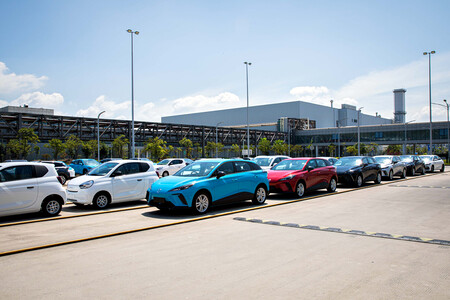
“Thanks to this new factory, MG’s electric cars will no longer face a 45% tariff in Europe,” stated a few days ago José Antonio Galve, MG Spain’s Head of Marketing and Product, in ‘Les Échos’.
Deep down, this plant is a win-win for MG. On one hand, it helps rehabilitate MG’s image, a brand that hardly anyone still regards as British, with the reopening after several decades of a factory on the European continent (it still has one in the United Kingdom).
And on the other hand, it provides a way out for Chinese factories, all operating under excess capacity. It also serves other companies within the conglomerate, spanning from logistics, including Ro-Ro ships, to the production of semiconductors.
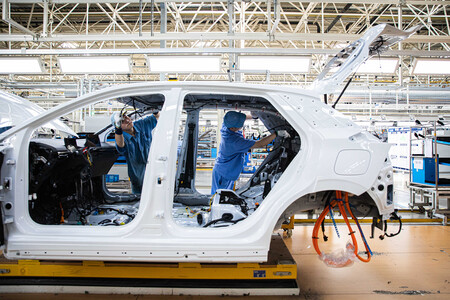
And the truth is that MG or SAIC do not need more capacity. With profitability barely reaching around 2% annually and overproduction in China, their strategy is to preassemble the cars there and simply screw on the parts in Europe to save tariffs, as Chery does (Omoda, Jaecoo, Ebro).
Local assembly will eliminate tariffs and logistics costs, allowing MG to push prices even further in the low-cost vehicle segment. The result will be unprecedented pressure on the margins of traditional manufacturers. And SAIC, owned by the Chinese state, does not need to generate enormous margins like a 100% private company.
Find Your Ideal Electric Car
If you’ve been thinking about buying an electric car, this will interest you. We’ve created the Personalized Electric Car Recommender, where in addition to viewing models that fit your needs you’ll also get answers to the doubts that most concern you, such as price, range, or nearby charging points.
Images | MG, public domain, Alfa Romeo