
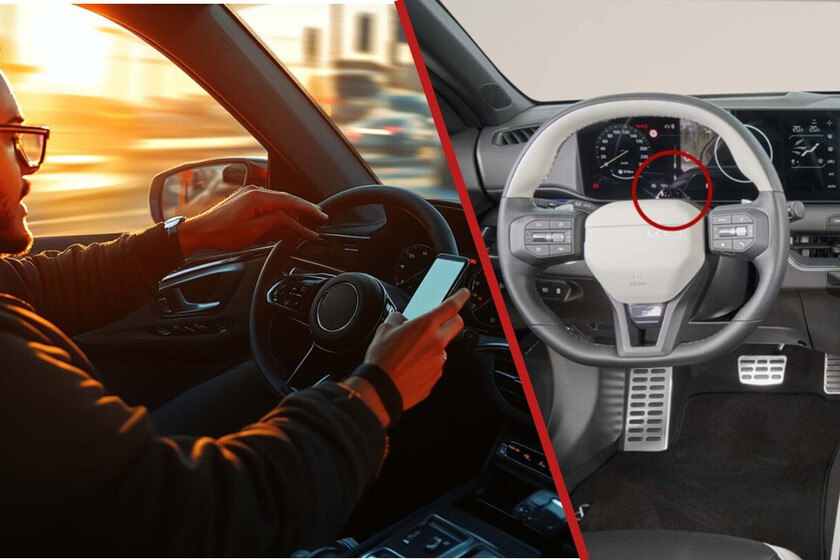
The next car you buy is going to come with far more technology than the ones that rolled off the factory line a few years ago (which is why it will also be more expensive). Since 2022, a series of ADAS that are mandatory by European mandate have begun to be introduced; a regulatory change carried out in three phases: 2022, 2024, and now, in July 2026.
We tell you which ones are mandatory in 2026, such as increased driver distraction monitoring or the alcohol interlock—an alcohol breathalyzer that prevents you from starting if you exceed the established blood alcohol limits.
New vehicles registered in Spain in 2026 must incorporate the same mandatory ADAS, but with stricter standards
The European road-safety regulation does not introduce new ADAS systems in 2026 beyond those that began to be compulsory in 2022 and 2024, but it tightens their technical requirements and scope.
This means that from this year, some systems must operate more precisely and in a wider range of real driving situations, especially those related to detecting vulnerable road users such as pedestrians or cyclists and monitoring the driver’s condition. These updates are covered in the European regulation GRS2 (‘General Road Safety 2’), and come into effect on 6 July this year for new registrations.
The seven ADAS that are already mandatory
- Intelligent Speed Assist (ISA): mandatory since 6 July 2022. It detects the road’s speed limit and notifies the driver—or progressively applies the accelerator—when the limit is exceeded. In 2026 its reliability is strengthened, especially in situations where speed limits change due to traffic, roadworks, or road conditions.
- Automatic Emergency Braking (AEB): mandatory since 6 July 2022. It acts when it detects an imminent collision and the driver does not respond in time. From 2026 it must offer better detection of pedestrians and cyclists, including more complex urban scenarios and at different speeds.
3. Lane Departure Warning: mandatory since 6 July 2022. Warns or gently corrects the trajectory if the vehicle drifts out of the lane without signaling. In 2026 a more effective intervention is required on interurban roads and a more precise detection of lane markings.
4. Driver fatigue and drowsiness detector: mandatory since 6 July 2022. Analyzes driving behavior (head movements, control usage and reaction times) to detect possible fatigue and recommend a break. Now its capability is refined to distinguish real fatigue from occasional maneuvers.
5. Rear cross-traffic detection: mandatory since 6 July 2022. Alerts to the presence of vehicles, pedestrians or cyclists when reversing, especially when leaving parking or garages with limited visibility.

6. Accident data recorder (EDR): mandatory since 6 July 2022. It is the car’s black box, recording key information before and during an accident (such as speed, braking and use of safety systems) to facilitate later analysis.
7. Pre-installation for an alcohol interlock with starter inhibitor: mandatory since 6 July 2022. Note that the law does not require the car to come with a built‑in alcohol interlock, but to include factory pre-installation, an interface needed to install a system that prevents starting if the permitted blood alcohol level is exceeded, though its activation depends on national regulations and the driver.
The two ADAS that will be mandatory from July this year
- Advanced driver distraction warning system. Monitors the driver’s attention level during driving and alerts if prolonged distractions are detected. In July 2026 its implementation is fully in all new vehicles, with stricter criteria about when and how to warn.
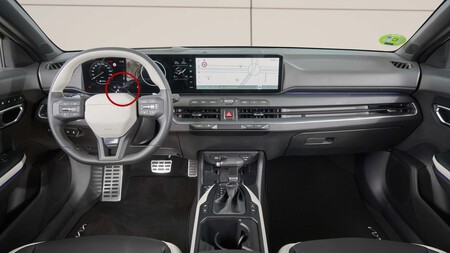
In the new Kia K4, the ADDW monitors you from behind the wheel.
- Advanced emergency braking system for pedestrians and cyclists. Since July 2026 it must offer better detection of pedestrians and cyclists, including more complex urban scenarios and at varying speeds.
Images | Unsplash, DGT, Kia