There are countries where it is possible to buy and own a car without making a significant financial sacrifice when you factor in the cost of living, taxes, and the average salary. Some of these include Australia, the United States, Denmark, or Canada. But at the opposite end of the spectrum there are nations where owning a vehicle requires more than 650% of the average annual salary, such as Turkey.
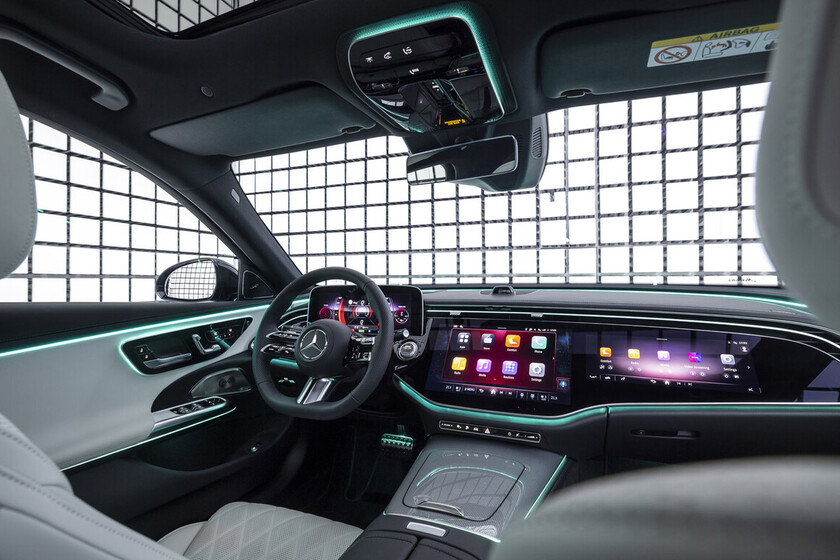
The country, which recently approved an additional 40% tariff on Chinese electric cars, heavily taxes automobiles based on engine size with the so-called Special Consumption Tax (ÖTV in Turkish), which explains why we can see the Mercedes-Benz E-Class with a 1.5-liter engine priced at around €240,000 at current exchange rates. This is not an isolated case.
Large sedans with small engines so that people can buy them
Turkish buyers pay more than double what they pay in Spain for the German sedan, and with a smaller engine. Here the базe model starts at a 2.0-liter engine with 204 HP, and this is because the SCT for new cars with an engine under 1.6 liters begins at 45% of the car’s value, provided the price does not exceed the ridiculously low $5,600.
But it is not the first time we have seen such small engines in flagship models. We have also observed it with the entry-level BMW 730i, equipped with a four-cylinder inline engine that was launched in Turkey and China a few years ago.
It is also the case with the BMW 5 Series, featuring a 520i and a 520d on the Turkish market with four-cylinder engines of 1.6 and 2.0 liters respectively, priced at €228,000 and €320,000 each. In Spain, their prices stand at €64,200 and €64,100.
Going to the other end of the spectrum, when selecting the most powerful examples such as a Mercedes-AMG E 53 Hybrid with its 3.0-liter engine, the ÖTV applied reaches 220%, pushing the price to €600,000.
Previously, vehicles in Turkey were taxed by weight, but taxation now depends on engine size. This shift hit Turkish consumers in 2020 when the ÖTV rose from 60% to 80% for imported vehicles with a 1.6-liter engine. Electric models with engines over 2,000 cc saw their taxes rise from 100% to 130%, while costs for cars in the high-end segment jumped from 160% to 220%. This is why we see the Mercedes-Benz E180 with a 1.5-liter engine or the BMW 520 i with a 1.6-liter engine.

Because as if that weren’t enough, the Turkish ITV is applied to the total price once ÖTV is included. For this reason, Turkey is one of the world’s most expensive countries to buy and maintain a car. The government’s aim is to boost the domestic market and cars manufactured in the country, which is also why it moved ahead of the EU and imposed additional tariffs on Chinese electric cars.
But this could be a misstep for the country: although the increases do not apply to cars produced locally, domestic manufacturers may struggle to benefit as they also rely on imported components.