
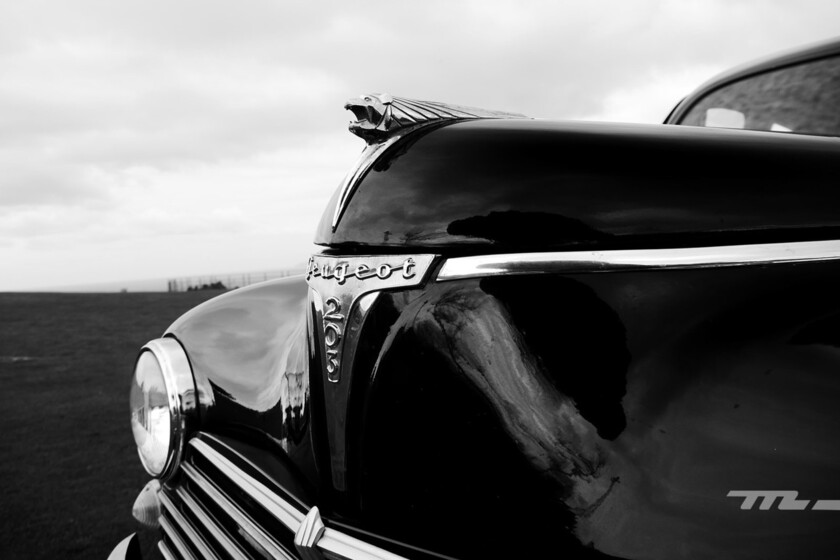
In a previous installment we analyzed the warlike and agricultural origins of some car brands, and now it’s time to explain the most varied origins of other automobile manufacturers.
It’s curious how education shapes the way we associate ideas. If I ask my father or mother about the Singer brand, the first thing that comes to mind are the striking sewing machines that were in almost every Spanish home in the first half of the 20th century. However, if I pronounce the same name in a conversation among motor enthusiasts, our minds cloud with the image of the best Porsche you can buy new today.
Precisely about that today’s story is, about how a company can go from sewing machines to sublime cars, even though in the cited example the two businesses have nothing to do with each other, except for the six letters that form its name.
The oldest car brand didn’t make cars

For many it is a surprise to discover that the oldest car brand isn’t Mercedes-Benz (to whom the invention of the automobile is often attributed) but Peugeot. How is it possible that Peugeot has existed for more than 200 years if the car itself is barely a century and a half old? Well, quite simply, because the French brand had a very different origin.
Indeed, when Jean-Jacques Peugeot founded the company in 1810 under his name (yes, the French are quite original in choosing brand names…) its industry was devoted to the manufacture of small coffee grinders or pepper and salt grinders, tools, saws and precision implements.
The Peugeot family never stood out for boldness, though there is a recognition of their good intuition when exploring new markets. It may seem obvious today that there are many customers to whom bicycles and cars can be sold, but 150 years ago very few would dare to bet on it.
In 1885 the bicycle was a revolutionary thing and even feared by some passersby, but Peugeot saw the potential of that magnificent machine that allowed a person to travel much farther and faster than on foot.
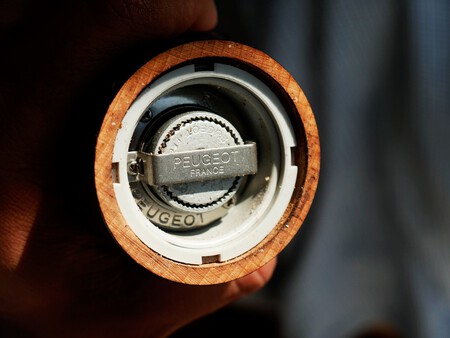
Peugeot still manufactures coffee and spice grinders today, more than 200 years on.
Moving from coffee grinders to bicycles may seem within reach, but getting Peugeot’s first automobile out of the factory doors in 1889—three years after building their first bicycle—deserves a mention. Truthfully, it was a very simple vehicle—little more complex than two bicycles joined together—and its motion was powered by an archaic steam engine.
The first combustion-engine car built by Peugeot would not arrive until 1890, when the Peugeot Type 2 hit the streets equipped with a Daimler patent motor. From then until now, the French brand has continued launching new automobiles to the market… as well as bicycles, and grinders for pepper or coffee.
Then you know what came next. In 2021 PSA merged with FCA to create Stellantis. From coffee grinders to a monstrous conglomerate.
The evolution of species and Japanese brands
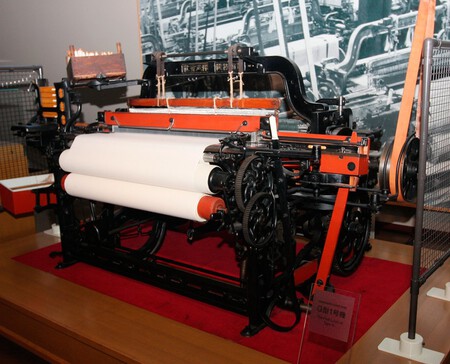
Old loom manufactured by Toyoda Automatic Loom.
Charles Darwin enunciated his Theory of Evolution based on observing the species that had managed to survive on the Galápagos Islands thanks to their habitat, which remained isolated from other predators. Something similar has happened with Japanese car brands.
Japan is an island, and just like the Galápagos, its isolation caused its society to evolve in a very particular way, maintaining a virtually feudal structure until the early 20th century. In a society so traditional, something as commonplace as a loom was the pinnacle of technology and, precisely, the seed of many of its car brands.
Kiichiro Toyoda said in 1939: “From now on, I want you to join your efforts to find a way to manufacture vehicles of superior quality.” This phrase was set in motion six years after the company Toyoda Automatic Loom decided to expand its business and found the automotive division Toyota Motor Corporation.
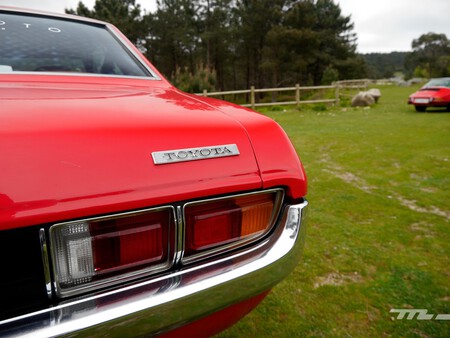
Toyota managed to turn quality into an identity.
Founded in 1926 by the Toyoda family, the Automatic Loom was one of the most powerful manufacturers of sewing machines and for the textile industry in Japan. Considering the idiosyncrasy of Japanese society at that time, with agriculture and fishing as the main economic activities, a textile machinery industry like Toyoda stood at the technological forefront and was one of the country’s industrial giants.
When ten years later they decide to manufacture vehicles to modernize a nation where transportation was basically carried out by people-powered carts, Toyoda sees fit to replace the “d” with a “t” in the company name to clearly differentiate family from business.
Again we have an example where a car brand does not arise out of nowhere, but from a company whose business is more or less linked to the production of serial and precision parts.
Perhaps a sewing machine seems simple to us, but believe me when I say there is a lot of ingenuity and technology inside. I urge you to watch an animation or video showing how its needle mechanism works to realize that, on another scale, it is much more complicated than a simple piston turning a crankshaft.
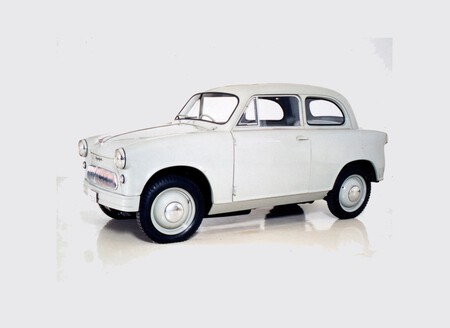
Suzuki moved from looms to motorcycles and cars, abandoning the latter until the cotton crisis forced them to resume making cars to expand their business.
The origins of Suzuki are almost identical. It also started as a manufacturer of machinery for the textile sector, virtually the only industry in Japan a century ago. Founded in 1909, the Suzuki Loom Works decided to expand into automobile manufacturing in the 1930s, but the vicissitudes caused by World War II led them to abandon that production line.
The 1951 cotton crisis triggered panic within the company and once again forced diversification, resuming automobile manufacturing that had been abandoned during the war. The postwar period also heavily shaped Japan’s transport needs, which required economical, simple and efficient vehicles rather than heavy American haigas.
In 2019 Toyota and Suzuki decided to join forces to create a financial and technological alliance, sharing cloned cars such as the Suzuki Swace and the Toyota Corolla, or the Across and the RAV4.
Bikes, motorcycles and cars: the evolutionary line
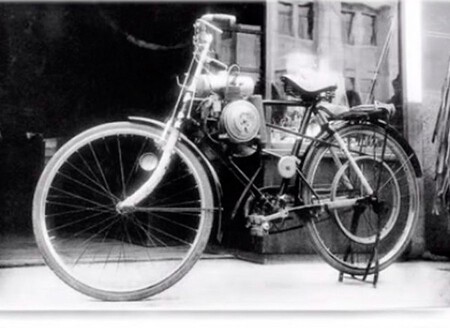
Honda took its first steps on two wheels, a path that Suzuki would follow to this day.
There is a saying that the Japanese lack initiative and simply copy what others invent. Honestly, I think that’s the usual bar talk, but it is true that, in Suzuki’s case, they simply copied Sohichiro Honda’s idea: to put a motor on a simple bicycle. The 1952 market release of this Suzuki “bicycle motor” marked the beginning of the company we know today as one of the few that produce vehicles on two and four wheels.
The invention by Sohichiro Honda arose from the need to offer the Japanese a cheap means of transport to acquire, easy to maintain and inexpensive to fuel. We are in 1948, barely 3 years after the two only nuclear bombings in the history of humanity (or more precisely, humanity’s inhumanity). With a fragile road network (either non-existent or bombed) and few natural resources, a motorized bicycle was ideal—seems the story repeats itself, though the technology and motives have changed.
From a motorized bicycle to progressively larger motorcycles and finally to cars, Honda grew and expanded its business at the same pace as Japanese society modernized, always in line with the needs of the moment.
Corchs and cars to revive a company
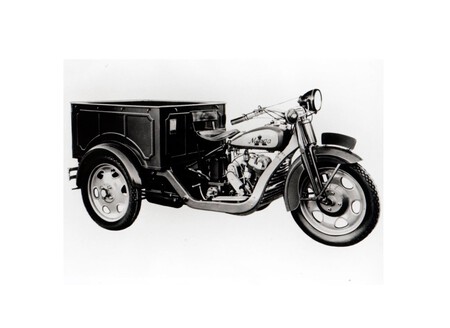
The first vehicle produced under the Mazda brand was the Mazda Da.
The case of Mazda is somewhat more picturesque. To begin with, its origins were under a very different name: the Toyo Cork Kogyo, another one of the few industries existing in late 19th and early 20th century Japan. This company was engaged in the manufacture and processing of cork.
Soon after the end of World War I, an earthquake unsettles half the country and the company’s foundations. It is marked by the arrival of numerous trucks and motorized vehicles sent for the reconstruction of Tokyo, which leads in 1927 to establish the bases of its new company destined for automobile manufacture. The shift in business was so drastic that they even decide to rename it, giving birth to Ahura Mazda and its first automobile, the Mazda Da presented in 1931.
In 2020 Mazda celebrated its centenary, and today they continue to swim against the current with cars that shun fashion in favor of personality.

As for the other three major Japanese car brands, their beginnings were somewhat more “normal.” Both Mitsubishi and Subaru arose as new branches of a corporate group, the former focused on naval transport and the latter on the famous Nakajima military aircraft factory, which after the war was dismantled by the Allies and re-founded as Fuji Heavy Industries, later becoming Subaru Corporation.
Nissan, for its part, can boast of having been one of the few companies born for and to manufacture cars, although it had several names (including Datsun) before being re-founded as Nissan in 1934.