From this year, passing the ITV could look very different. With the technical evolution of cars—featuring more ADAS driving assistance systems and greater electrification—it is necessary to update the checks carried out at ITV facilities.
The Council of the European Union votes this week on a proposal to revise the package on the vehicle technical inspection (ITV), in which both batteries and ADAS systems will be checked.
What are the possible changes to the ITV
In April 2025, the European Commission proposed a revision of the regulation governing the vehicle technical inspection in the European Union, which dates from 2014. The transport ministers of the member states meet this week in the Council of the EU to approve or reject the proposals. Thus, in the coming years, new control points could be added to the already numerous checks of this mandatory technical inspection.
Controls of NOx and particulate emissions
Among the proposed measures, we will see new emission checks aimed at monitoring NOx (nitrogen oxides) and fine-particle emissions more precisely. To that end, ITV centers will need to be equipped with new dedicated devices.

“The current methods for controlling exhaust emissions are not adequate for the latest vehicles and technologies,” the Commission states, noting that “there is currently no EU regulation that allows verification of whether vehicles are equipped with NOx reduction systems or particulate filters that are defective or tampered with.”
In fact, in Spain, only the opacity of diesel exhaust and carbon monoxide emissions in petrol cars are measured. In neither case are NOx emissions monitored, except in some pilot tests.
Controls of the traction batteries in electric and hybrid vehicles
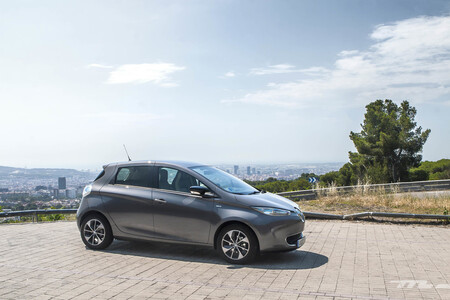
Times change and an increasing number of cars on the market are electrified. Whether hybrids, plug-in hybrids (PHEV), or purely electric, all of them come with a traction battery of varying size. In fact, combining electric and plug-in hybrids, one in five cars registered in Europe already has a charging port.
Inspection centers will therefore need to adapt. “There are no harmonized norms for the inspection of high-voltage components in these vehicles, which has led the member states to develop different control protocols,” laments the European Commission.
Therefore, mandatory visual checks of several elements (battery, cables, charging inlet, etc.) are planned, complemented in some cases with electrical measurements or functional verifications. This will require new training for ITV technicians.
ADAS driving assistance systems will also have to be checked
ADAS, or driving assistance systems, have become an increasingly comprehensive arsenal of active safety features in vehicles, often driven by European regulations that make them mandatory. Many of these systems, such as automatic emergency braking or lane-keeping assist, are already mandatory in the European Union, with the aim of improving road safety, which is precisely the basis for the technical inspection.
In light of this, the European Commission considers that these active aids should form part of regular inspections. It also stresses the need to modernize the technical controls to be able to assess the new sensors and functions, though it concedes that the proposed measures do not yet fully align with the most innovative technologies. Designing an inspection protocol for ADAS will, however, be a complex process that will take time.