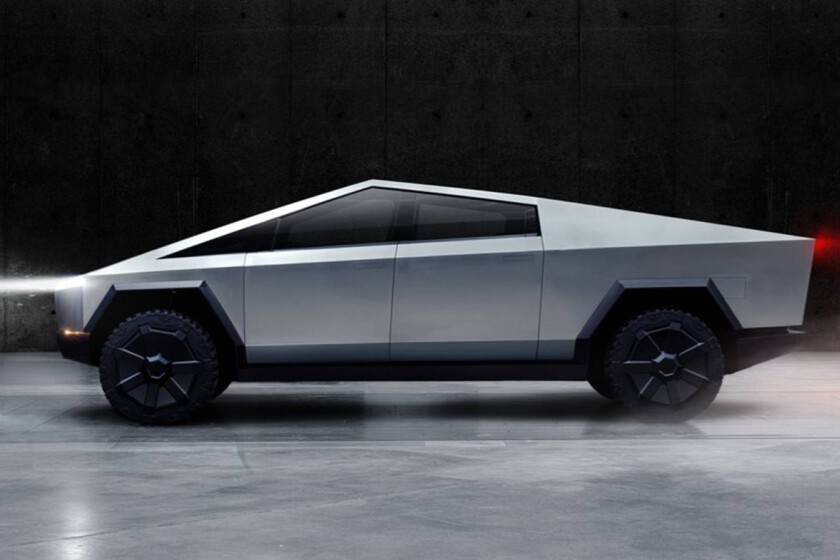
The Tesla Cybertruck was conceived in 2019 to become Tesla’s grand phenomenon, or so Elon Musk hoped, presenting it as a groundbreaking, futuristic electric pickup capable of reshaping the American market. He also promised astronomical production and sales figures to shareholders and a surprisingly low price.
But the reality is quite different. Seven years on, the Cybertruck remains far from those forecasts, and Tesla has had to lean on corporate customers to sustain registrations. New data gathered by Bloomberg and S&P Global Mobility indicate that a large portion of recent deliveries come from purchases made by Musk’s own companies, with SpaceX as the main driver.
The Cybertruck Sells Better on Paper Than on the Street
Only in the fourth quarter of 2025 did SpaceX register 1,279 Cybertrucks in the United States. That accounts for more than 18% of all units registered in that period. In other words, nearly one in five went to another company owned by the same owner. Moreover, purchases did not slow with the year turning: other companies tied to Musk continued buying units in the early months of 2026.
Thus, what the figures have pointed to for months is confirmed: private demand is not keeping pace with the expected rhythm. Musk had spoken of a capacity of 250,000 units per year… while actual sales estimates for 2025 hovered around 20,000 units. And this was while the Cybertruck was meant to be Tesla’s next big commercial success after the Tesla Model 3 and the Tesla Model Y.

Price is another weight on the equation. During its 2019 reveal, Tesla spoke of an entry-level version of the Tesla Cybertruck from $39,900 (about €36,500 at current exchange), a figure very aggressive for the U.S. market. But the model ended up arriving with far higher pricing: the first versions started around $79,990 (about €73,000) and the better-equipped variants exceeded $99,000 (more than €90,000).
For many buyers, it stopped being a disruptive pickup and became an expensive indulgence. And on top of that, the Cybertruck is a very particular vehicle; its extreme design draws attention, but it also narrows its audience. Not everyone wants to drive a gigantic stainless-steel pickup that generates as much attention as debate.
Tesla still has the potential to steer the situation with new versions, price adjustments, or more rational production. But today the Cybertruck seems farther from becoming a blockbuster than from becoming one of the most overhyped launches of the electric era. Because when a brand needs to buy back part of its own product, the market has already spoken.