
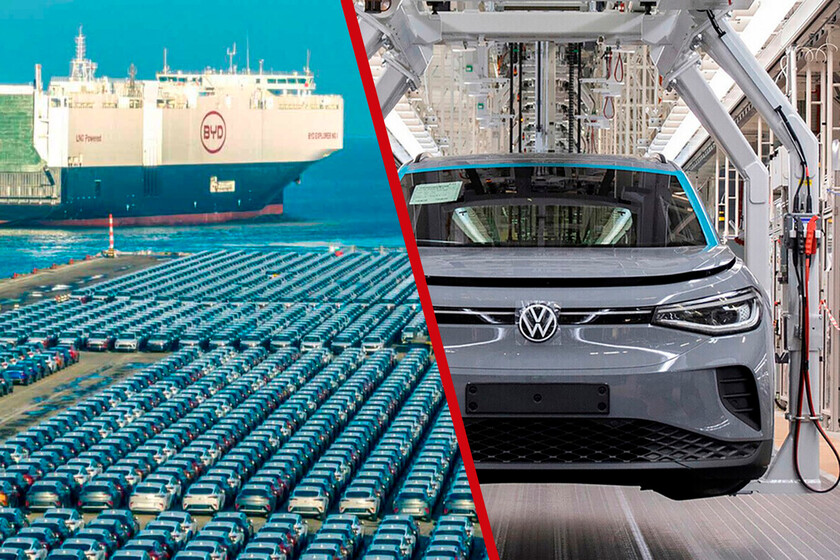
The European Union unveiled a few months ago the contents of the proposed law aimed at shutting the continent’s door to Chinese manufacturers. The idea, simple, is that the cars that Chinese brands sell in Europe must truly be ‘Made in Europe’, if Chinese companies want to access European public funding.
Europe intends to apply to China the same conditions that the Asian giant has imposed on Western companies over the last thirty years.
Tariffs on Chinese electric cars have not been sufficient
With this proposed law called the Industrial Accelerator Act (IAA), the European Commission thus introduces a “European Preference” to tighten Beijing’s investment conditions in the EU. The measure responds to a significant industrial crisis.
Since 2024, 200,000 jobs have been lost in energy-intensive sectors and in the automotive industry, and another 600,000 job losses are projected in the automotive sector over the course of this decade. The trigger is the flood of Chinese exports to Europe, combined with the construction of plants that create little local employment.

The Ebro S700 and S800 are Tiggo and Tiggo 8 models manufactured in China, shipped to Spain as kits, and reassembled here under the Ebro brand.
To guarantee European local production, thresholds for “Made in Europe” content are set: 70% of components of European origin for electric vehicles, and 25% for both aluminum and cement. In other words, reassembling in Europe a car manufactured in China and that arrived here in parts, as currently done by Chery (Omoda, Jaecoo), Ebro or Santana, would not be considered European-made.
This measure aims to exclude China from European public funding and to tighten Beijing’s investment conditions in the EU. Chery, which took back Nissan Barcelona’s factory for assembling its Omoda and Jaecoo and the Ebro vehicles from the Spanish EV Motors, received Perte aid, i.e., European funds, to acquire the factory.

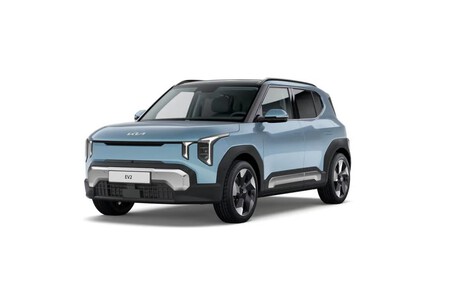
When a few years ago people wanted to show off a car, the most common approach was to highlight low fuel consumption, power, or extras. Today, that is no longer the case. Technology has taken center stage. But it isn’t always in the places we expect, rather in much less obvious spots.
Advice provided by the brand
Beyond trying to close the doors to Chinese brands, Europe seeks to reclaim its industry. The European Commission aims to raise the share of industry in the European GDP from the current 14% to 20% by 2035. Yet, China dedicates between 4% and 4.5% of its GDP to public support for industry (subsidies, tax advantages, and preferential credit), which has generated overall overcapacity in sectors such as steel, electric cars, and renewable energy.
That Chinese overcapacity explains, in the automotive sector, the price war in China and the willingness to export cars by any means, especially to Europe where the margins they can generate per vehicle are three times higher than those earned in China.
In Europe, the automotive sector was critical of the local-content requirements, arguing the complexity of its supply chains (many components come from China, especially traction batteries and systems that require microchips) and the risk of trade retaliation.
The China Chamber of Commerce in the EU warned that the rule could erode Chinese investors’ confidence, calling into question the practical feasibility of the mandatory local-partnership requirements, which they deem commercially and technologically disadvantageous. In other words, they threaten to withdraw or limit Chinese investment.
Find Your Ideal Electric Car
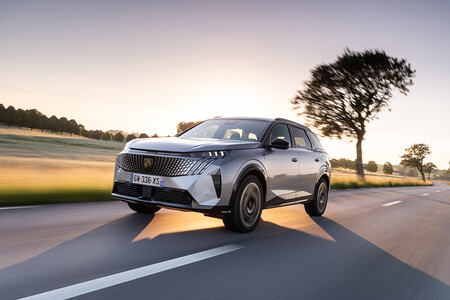
If you have been considering purchasing an electric car, this will interest you. We have created the Personalized Electric Car Recommender, which besides showing models that fit your needs also offers answers to the questions you are most likely to have, such as price, range, and nearby charging points.