
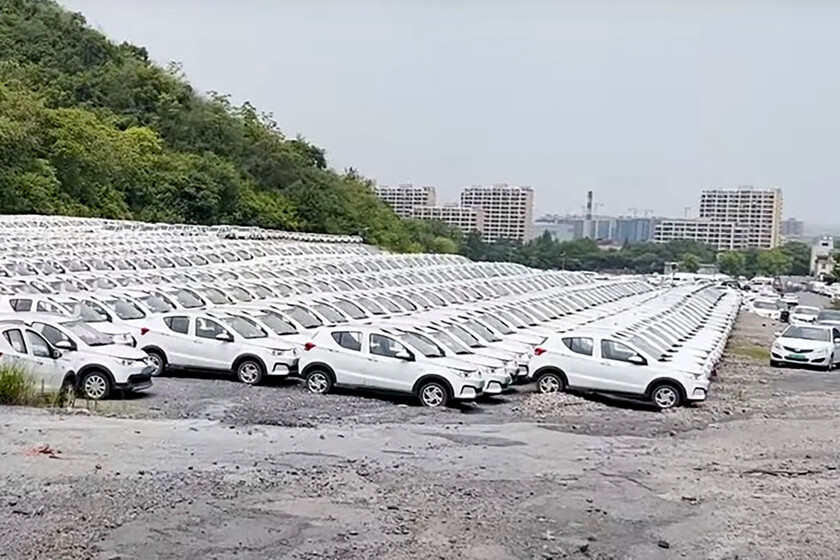
In several regions of China you can find peculiar graveyards: hundreds of electric cars parked in empty lots, covered in dust or moss, with no one reclaiming them. The image is striking and is often used as proof that electric cars are an imposed trend, a fallacy, and that they aren’t desired—even in China. Especially when their expensive battery fails, condemning them to end up abandoned in an open field.
However, it isn’t all that simple. The reality is more complex. Yes, there are abandoned electric cars, but the state of their battery has nothing to do with it. These cars belong to fleets of a number of car-sharing companies that, when that particular bubble in China burst, slid into bankruptcy.
The “electric car cemeteries” that social networks keep distorting
Since 2009, the Chinese government decided it wanted to lead the electric vehicle industry and opened the public purse. By 2022 it had allocated nearly $30 billion in subsidies, with rebates of up to $8,400 per car purchased. For manufacturers, subsidies reached as high as €13,000 per car produced in the early days. The message was clear: electric is the future, and the State will pay for it.
The market’s response was immediate: hundreds of companies rushed into making electric vehicles. The problem is that many of those cars were mediocre, some barely achieving 100 km of range, and they were not purchased by everyday citizens but by car-sharing companies that benefited from the subsidies. No real demand behind it; public money was involved.
Certainly hundreds of car-sharing companies emerged between 2016 and 2019, with the most popular ones rolling out tens of thousands of vehicles across China. Their growth was driven in part by the attempt to capitalize on the sharing economy, seeing the success of bike-sharing services, and by the abundance of electric cars in the country, thanks to the generous government subsidies aimed at electric car and PHEV manufacturers.
However, the cars, often of very poor quality, were more expensive to operate than a bike-sharing service. Moreover, many companies did not have agreements with cities to park or recharge the cars freely on their streets. All those costs ended up being passed on to users who could travel by metro or taxi for less money and with greater ease. In the end almost all have disappeared and they found themselves with hundreds of cars that had no outlet.
Microcity, one of those car-sharing companies, saw its fleet left parked in a vacant lot. On the banks of a river on the outskirts of Hangzhou, the company paid the landowner more than 30,000 yuan a year (about €4,500) to store the cars on his field.
Today, those cemeteries of abandoned cars are the graphic representation of a more complex issue: how to manage technological transitions responsibly.
Find your ideal electric car

If you’re considering buying an electric car, this will interest you. We have created the personalized electric car recommender, which in addition to showing the models that fit your needs will also provide answers to the questions that may worry you most, such as price, range, or nearby charging points.