
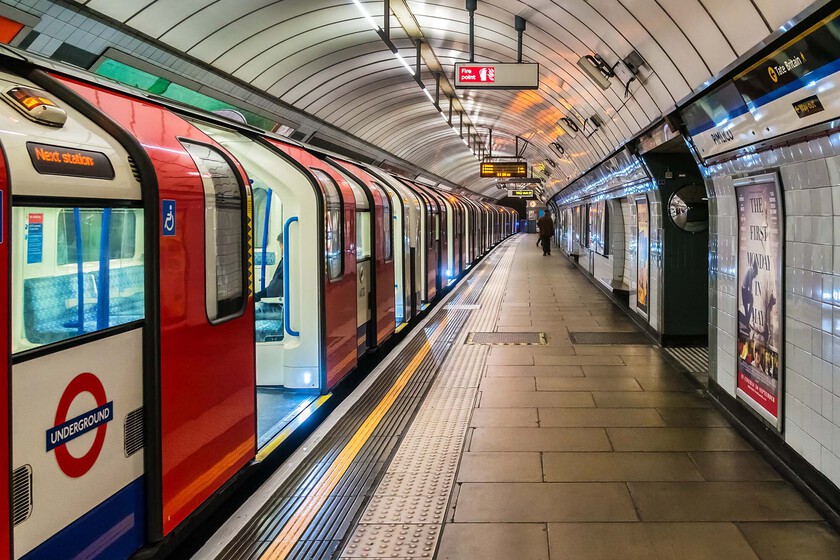
In the mid-19th century, London was the world’s largest city and also one of the most chaotic. Its streets were completely saturated, with carriages, goods, and people blocking any attempt at efficient mobility. There was no room for more… and finding a solution was no longer optional.
The answer came from the least expected place: politics. A lawyer, Charles Pearson, who worked in the city administration and had spent years pushing urban reforms, proposed in 1843 something that at the time sounded futuristic and radical: building an underground tramway to prevent the city’s collapse.
London didn’t invent the subway, but it did solve the biggest problem of urban transport
That idea lingered in the air for years, amid technical doubts and forecasts of astronomical costs. But pressure grew and eventually attracted private investment. In the mid-1850s, the first tests and works began, and the project ceased to be mere theory. Finally, on January 10, 1863 the world’s first subway line began operating between Paddington and Farringdon.

It was a large-scale experiment: steam locomotives running underground, carriages lit by gas and tunnels that barely vented the smoke. It wasn’t comfortable, nor clean, nor especially safe… but it worked. And that was enough in a city that needed to move thousands of people every day to avoid collapsing. That first line became the starting point for a network that, over time, has surpassed 400 km in length and 270 stations.
Beyond the technical aspect, funding was key. From the late 19th century, various private companies pushed their own lines to tap into the demand of a city in full growth. In 1868, the Metropolitan District Railway was inaugurated between South Kensington and Westminster, while the Metropolitan Railway continued expanding to the suburbs.
View this post on Instagram
Nolan Kessler
I focus on performance-driven cars, emerging technologies, and the business forces shaping the automotive industry. My work aims to deliver clear, relevant insights without unnecessary noise, with a strong attention to detail and accuracy. I follow the evolution of mobility daily, with a particular interest in what defines the next generation of driving.