
A few days ago, the International Energy Agency (IEA, as abbreviated in English) published a ten-point plan to save energy. Its recommendations are aimed at reducing the impact of the energy crisis stemming from the Iran War, given that the situation does not seem likely to be resolved soon and is increasingly affecting the global distribution of oil and gas.
Now, it is the European Commission that “urges Member States to coordinate measures to guarantee the security of oil supplies in the face of the Middle East energy crisis.”
More Car Sharing and More Telework
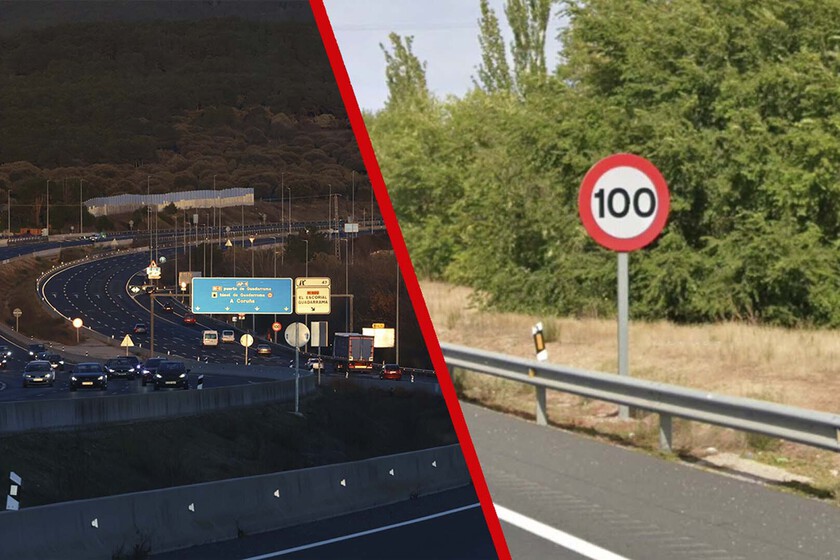
Young people may not remember, but in 2011, Spain took a highly controversial decision: to cut the speed limit by 10 km/h on highways and motorways to save fuel, so the limit on these roads dropped from 120 km/h to 110 km/h. Fortunately, the measure was in effect from March of that year until July, but 15 years later it is back on the table with the same objective: saving fuel.
This time it is only a recommendation, at least for now, and it does not come from the Government of Spain, but from Brussels, specifically the European Commission. The Energy and Housing Commissioner, Dan Jørgens, has proposed a series of measures so that European citizens save energy amid the Middle East energy crisis triggered by the Iran War.

What Jørgens has done is propose the same as the International Energy Agency, sending a letter to all Energy Ministers of the European Union. “The security of the European Union’s energy supply remains guaranteed. However, we must be prepared for a possible prolonged interruption of international energy trade. Therefore, we must act now. And we must act together, as a true Union. Only by working together can we be stronger and protect our citizens and businesses more effectively,” Jørgens said.
These measures are especially focused on the transport sector and highlight one that affects all drivers: lowering the speed limit by 10 km/h on highways and motorways to reduce oil consumption. In Spain, the limit is 120 km/h, so we would return to 110 km/h, which sparked so much discussion in 2011.
According to the IEA, this measure would allow reducing consumption by between 5% and 10% in each car and, in general, would reduce oil consumption in the private car sector in Europe by about 1% to 6%. For trucks, consumption would drop by around 5%.
Another measure proposed by the IEA and replicated by the European Commission is to promote public transport: “Shifting private car travel to public transport, such as buses and trains, can reduce the use of national oil for cars by 1% to 3%. Options such as cycling and walking for shorter trips can lead to more reductions,” says the IEA.
It is also proposed to grant private cars access to large cities on different days, that is, restricting access to large populations on specific days based on license plates. It also recommends car sharing: “When combined with eco-driving measures, including checking tire pressure, adjusting air conditioning settings, and efficient driving practices, the demand for fuel for cars can be reduced by around 5% to 8%.”
Of course, one of the recommendations is to practice efficient driving, but there is also talk of avoiding flights when alternatives exist: “A reduction of around 40% in flights taken for business purposes is feasible in the short term and, with very high participation in flight-reduction campaigns related to work, could reduce jet fuel demand by 7% to 15%.”
There is mention of working from home when possible, although, in most cases, this is not in the hands of workers but of the companies for whom they work or the administration.
“Working from home can significantly reduce the oil consumption from commuting. At the national level, three additional remote-working days, for those whose jobs allow it, could cut car oil consumption by 2%–6%, with potential average reductions of around 20% for individual drivers,” says the International Energy Agency.
Images | Unsplash and Google Street View